The industrial world is currently caught between two realities: the breakneck speed of technological innovation and the reality of actually implementing the products borne of these advances. However, misconceptions and uncertainty often slow adoption can be just as pervasive as the logistics of integration. Often, fears and misunderstandings surrounding the implementation of more “autonomous” technologies like AI and robotics underlie the boardroom’s reticence to invest in cutting-edge control systems; it’s not so much a budget issue as it is a “but what if” issue.
Throughout our decades of control system integration projects, we’ve found that communicating the sustainable, profitable reality without diving into engineering jargon can have a profound impact on how boardroom and plant floor teams perceive new innovations in automation. This has become particularly true with robotics and AI. So let’s talk about some prevailing myths that hold back true progress in AI, robotics, data center automation, energy, and water management.
Myth #1: The Future of AI is Basically an Episode of Westworld
There’s a misconception that AI will (or already has) become a sovereign, self-correcting brain that, once fully integrated into a SCADA system, eliminates the need for human oversight. But we have moved from purely generative AI to industrial AI, and it is a tool of correlation, not causality. AI can identify that a boiler’s efficiency drops when humidity is high, but it doesn’t know why. An operator is needed to interpret the problem, and a systems integrator needs to program the logic.
Advanced machine learning and industrial analytics models combine structured data analysis with adaptive decision-support capabilities. And in fact, companies that prioritize this type of custom augmented intelligence see 25% increase in efficiency with AI-driven control system upgrades1. AI isn’t running the plant; it highlights the data that actually matters so the humans can focus on high-level tasks instead of reacting to constant alarms.
Myth #2: Robotics are Meant to Replace Human Labor
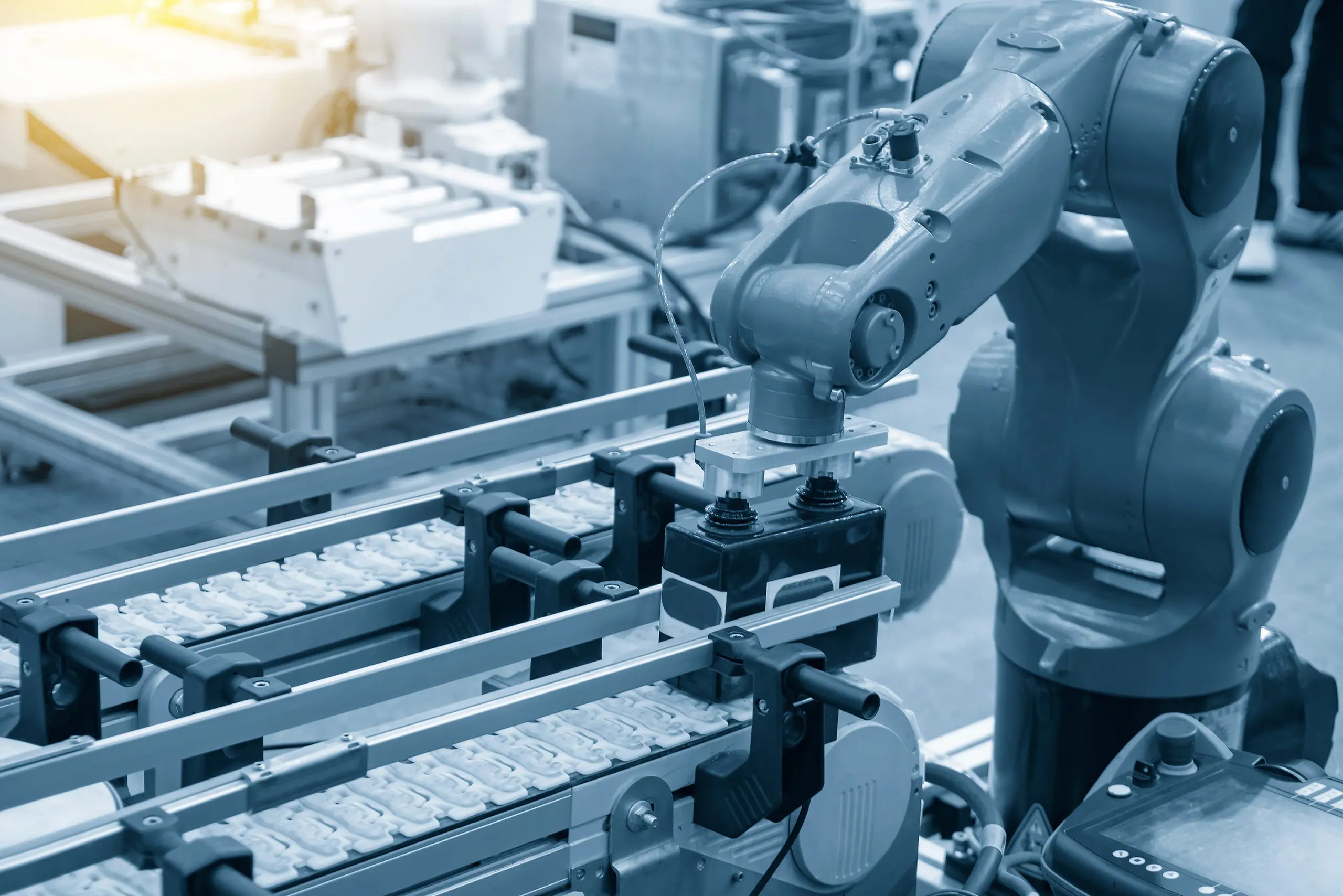
Another related misconception is that the rise of new humanoid robots and advanced cobots signals the decline of the human manufacturing workforce. But it’s more complicated than that. Companies are facing the largest industrial labor shortage in decades; robotics isn’t “taking” jobs but filling vacancies that people either do not want or cannot safely perform.
AI and robotics automation added flexibility to the rigid automation systems of the past; robots can perform tasks that commonly cause chronic repetitive strain injuries that result in worker compensation claims and high turnover. Delegating tedious and unfulfilling tasks like palletizing and heavy lifting to autonomous robots allows companies to retain veteran workers because they can apply them to less taxing, more complex, and fulfilling tasks2.
Myth #3: Data Centers are the Death of our Energy Systems
The current perception of data center energy use is that they are aggressive parasites that drain local power grids and water tables to operate. And AI demands have skyrocketed – we do need solutions to the resources they require. Data centers have become leading investors in grid modernization and water circularity, and many are working on water restoration and carbon-negative initiative research3. Data center automation is inherently continuous; there’s no time for downtime, so it’s natural that many are investing in grid resilience strategies, including renewable energy integration, advanced cooling technologies, and energy optimization initiatives.
Concurrently, many Tier 4 data centers now utilize industrial wastewater recycling. These automated systems take wastewater from the grid, treat it onsite for cooling, and return it to the grid cleaner than when it arrived. So, with an ethical commitment to sustainable data center development, these facilities can contribute to water efficiency and treatment efforts – bolstering infrastructure as opposed to draining it. It’s just going to take some time to develop and implement these new infrastructures.
Myth #4: Water Efficiency is a Simple Set-And-Forget System
Similar to the energy perspective is wastewater. Wastewater automation is often perceived as a simple series of pumps and valves paired with an HMI. But wastewater systems are dynamic – chemically complex, sensitive to fluctuations in loads, seasons, and aging infrastructure. AI-driven analytics are increasingly used to enhance wastewater automation performance, particularly in optimizing aeration, chemical dosing, and anomaly detection; though strategies are still developing, the potential is already evident4.
Across municipal, industrial, and agricultural sectors, AI is being used to continuously monitor water quality, predict treatment disruptions, optimize aeration and chemical dosing in real time, and detect anomalies before they become compliance issues. Rather than treating wastewater management as a static engineering problem, AI reframes it as a continuously optimized control system improving efficiency, reducing energy and chemical use, and helping facilities maintain compliance under increasingly variable operating conditions.
Myth #5: System Integrators Only Care About Operational Efficiency
Whether or not anyone believes industrial organizations care about the environment, the reality of right now is that environmental concerns – energy, emissions, hazardous waste, water – are, in fact, about operational efficiency. Hence, everything is integrated. Control systems are no longer operational siloes; machine learning and energy consumption forecasting, liquid-to-chip water cooling, and intelligent emissions tracking are increasingly part of the control “loop” as opposed to separate domains.
Systems integrators like E Tech Group are not treating sustainability as a parallel objective but as a direct input into production performance, uptime, and cost control. Energy optimization, emissions tracking, and water reuse are now embedded into SCADA, DCS, and IIoT architectures alongside traditional process variables like temperature, pressure, and throughput. Sustainability should be co-designed into the automation system itself, which makes our custom, hardware- and software-agnostic approach increasingly valuable to our clients. For example, energy consumption and emissions data are increasingly tracked directly within SCADA and industrial data platforms, allowing operators to optimize both production performance and sustainability metrics in real time.
In this fast-paced, high-demand, high-stakes time in which we find ourselves, the environmental, industrial, and engineering sectors are becoming increasingly interdependent; they need each other for comprehensive, resilient, flexible solutions to become a mainstream reality. Industry 5.0 is right on the horizon; let’s continue to clear up myths and misconceptions so everyone can be invested in progress, both industry and its environmental impact.
Sources:
- AI Gnome: AI Across Industries: How It’s Transforming Every Line of Business
- IFR: Top 5 Global Robotics Trends in 2026
- Energy & Environmental Science: Flipping the Switch: Carbon-Negative and Water-Positive Data Centers Through Water Heat Utilization
- MDPI: A Review of Applications of Artificial Intelligence in Wastewater Treatment