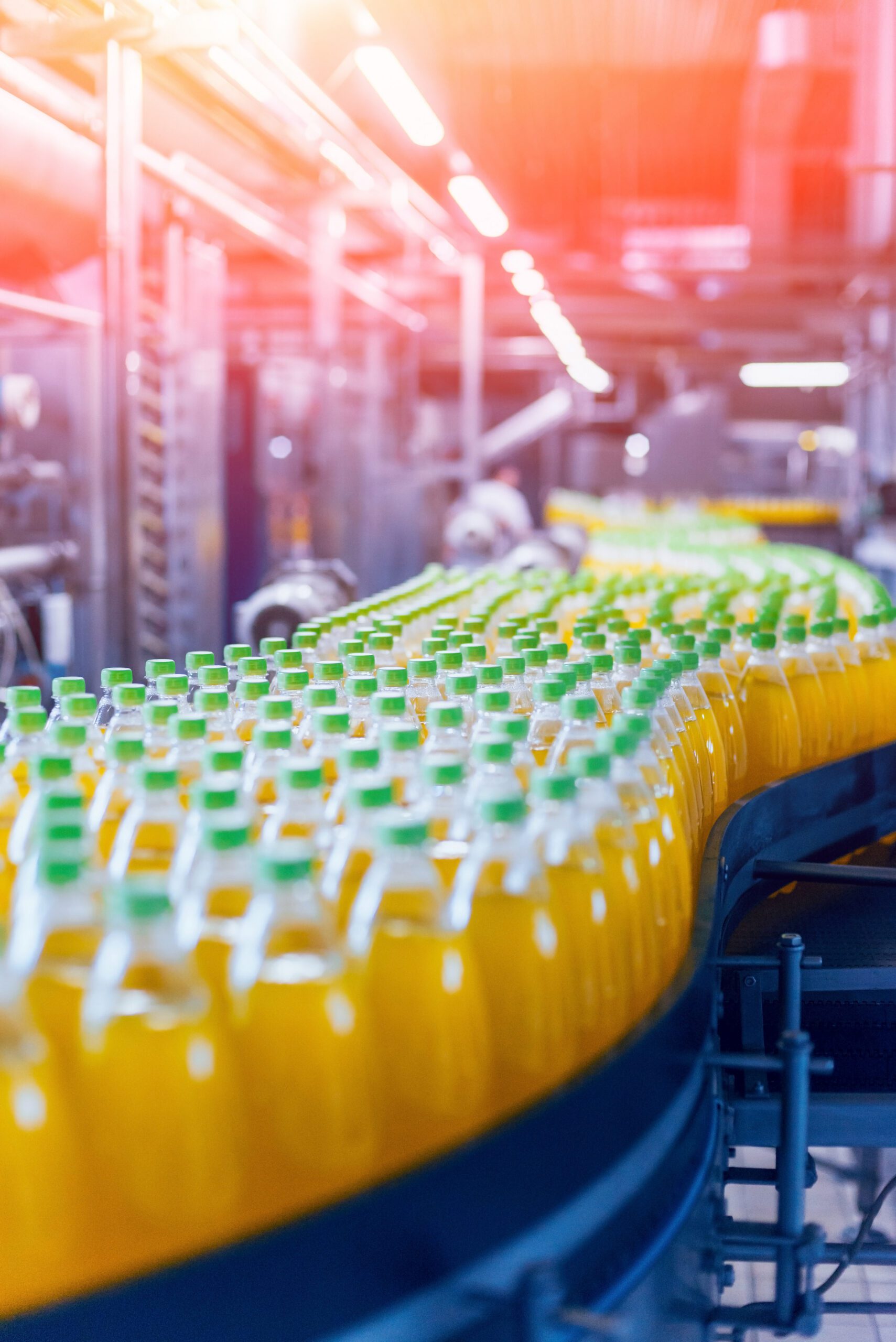
Food and beverage manufacturers have long been leaders in industrial automation. From automated packaging lines and robotic palletizing systems to sophisticated process controls and production analytics, automation helps facilities increase throughput, improve consistency, maintain regulatory compliance, and control costs.
And yet, food and beverage automation presents a unique set of challenges that many discussions on automation and controls strategy overlook. While industry conversations often focus on efficiency gains and emerging technologies, successful automation projects require manufacturers to navigate issues that are less common in other industrial sectors. Many facilities also leverage ISA-88 batch control strategies, manufacturing execution systems (MES), and Overall Equipment Effectiveness (OEE) analytics to improve production consistency and operational visibility.
Let’s look at 7 major challenges the food and beverage sector faces and how control system design and strategy can overcome them:
1. Product variability is an inherent reality.
Unlike manufacturers that work with highly standardized materials – such as chemical or metals manufacturing, food and beverage producers often deal with ingredients that vary naturally. For instance:
- Agricultural products are influenced by weather, growing conditions, seasonal changes, and regional differences, resulting in fluctuating moisture content, density, size, sugar concentration, etc.
- Meat processing facilities encounter significant differences in cut, texture, quality, and fat content from animal to animal; these differences must be managed effectively enough for consistent compliance and product quality, despite being variables endemic to the raw materials.
These variations can affect everything from processing times and equipment performance to final product quality. As a result, automation systems in food and beverage facilities must be designed to accommodate changing inputs rather than assuming every batch will behave identically. Advanced control system strategies, real-time monitoring, and adaptive process controls often play a critical role in maintaining consistency.
2. Sanitation requirements influence every automation decision.
One of the biggest differences between food and beverage manufacturing and many other industrial environments is the importance of sanitation – a challenge shared with other precision sectors like pharmaceutical manufacturing. Constant sanitation means equipment is routinely exposed to cleaning chemicals, moisture, and temperature fluctuations. These conditions create significant challenges for automation hardware.
Control panels, sensors, cameras, HMIs, and networking equipment must be selected with environmental conditions in mind. Components that perform well in a traditional manufacturing setting may fail prematurely in a high-moisture food processing environment.
Automation engineers must consider:
- Washdown ratings and enclosure requirements
- Corrosion resistance
- Hygienic equipment design
- Chemical compatibility
- Ease of cleaning and maintenance
Design decisions that seem minor during project planning can have major implications for equipment longevity and reliability of plant automation. In many cases, achieving both operational performance and sanitation compliance requires specialized automation engineering expertise and careful equipment selection.
3. Frequent changeover reduces the value of rigid automation design.
Many food and beverage manufacturers are expanding product lines to meet changing consumer preferences and increasingly variable demand; because of this, production facilities often manufacture dozens – even hundreds – of different products using shared equipment. This creates a challenge for automation systems as control logic must be flexible and multi-functional.
In the past, manufacturers pursued maximum efficiency by optimizing production lines for a limited number of products. But in food and beverage automation, production schedules may require multiple changeovers per day. Packaging formats can vary significantly. Recipes may change frequently based on demand.Automation systems that cannot adapt quickly become operational bottlenecks.
Modern food and beverage facilities increasingly rely on recipe management systems, flexible production architectures, and integrated MES solutions and ISA-88 batch management architectures that allow operators to switch between products with minimal downtime. In these environments, the most successful automation projects are often those that prioritize agility rather than simply maximizing throughput.
4. Traceability has become a business requirement.
Food safety regulations and consumer expectations have increased the importance of traceability throughout the supply chain. Among other factors, manufacturers must be able to identify:
- Where ingredients originated
- Which batches were used in production
- When products were processed
- How products moved through the facility
- Where finished goods were distributed
In the event of a recall, access to accurate production data can significantly reduce financial and operational impacts that result from compliance violations. But achieving this level of visibility requires more than collecting data; control systems must be integrated across the enterprise.
Many facilities are investing in connected automation architectures that link:
- SCADA systems
- Manufacturing execution systems (MES)
- Enterprise resource planning (ERP) platforms
- Quality management systems
- Production historians
The result is a more complete digital record of end-to-end production activity that supports compliance, quality assurance, and operational decision-making.
5. Downtime can have immediate financial consequences.
Every manufacturing facility experiences downtime; however, the consequences are often more severe in the food and beverage sector. Many products are perishable; production interruptions can result in spoiled ingredients, discarded batches, missed delivery schedules, and increased waste. A failed refrigeration system, process upset, or packaging line outage can create losses that extend far beyond lost production hours.
This reality is driving increased interest in control system technologies like:
- Predictive maintenance programs
- Condition monitoring systems
- Real-time performance analytics
- Automated alerts and notifications
- Reliability-centered maintenance strategies
The ability to identify potential issues before they cause production disruptions is becoming a significant competitive advantage. Rather than reacting to failures, manufacturers are increasingly using industrial automation technologies, predictive analytics, and condition-based monitoring to reduce failure risk. This strategy protects compliance and quality, in turn protecting the marketplace.
6. Persistent labor challenges continue to impact operations.
Like many industrial sectors, food and beverage manufacturers face ongoing workforce challenges. Experienced operators and maintenance personnel are retiring, which can create gaps in operational knowledge. At the same time, facilities compete to attract and retain skilled workers in the midst of a persistent labor shortage and transient labor culture.
Automation can help address labor shortages, but technology alone is not enough; successful systems must be designed with users in mind. Complex interfaces, confusing workflows, and inconsistent operating procedures can reduce adoption and create new challenges for production teams.
Modern automation system upgrades progressively emphasize:
- Intuitive HMI design
- Standardized operating procedures
- Simplified alarm management
- Digital work instructions
- Operator training tools
By improving usability, manufacturers can help employees become productive more quickly while reducing the risk of operational errors. Streamlining operations also increases workplace satisfaction by reducing frustration and tedium, boosting chances of retaining valuable talent.
7. Energy management and water efficiency are growing priorities.
Food and beverage production is resource intensive – facilities often consume significant amounts of electricity, water, and refrigeration capacity. As utility costs continue to rise and resources become increasingly vulnerable, manufacturers are looking for ways to optimize resource consumption without sacrificing production performance.
Automation systems can provide the visibility and control necessary to identify inefficiencies and support continuous improvement efforts. Common opportunities include:
- Monitoring utility consumption in real time
- Optimizing refrigeration systems
- Automating cleaning cycles
- Improving boiler efficiency
- Reducing water usage during production and sanitation
These initiatives not only lower operating costs but also support broader sustainability objectives. Integrating energy management systems with machine learning capabilities can drastically reduce resource consumption and, in turn, carbon impact, which is increasingly regulated across manufacturing sectors.
The Future of Food & Beverage Automation is Flexibility
Automation and systems integration continue to play a critical role in helping food and beverage manufacturers improve productivity, quality, compliance, and profitability. However, successful projects require more than simply deploying new technology – they must account for the obstacles and nuances unique to the industry.
The facilities that achieve the greatest value from automation upgrades are often those that recognize these realities early and design control systems with flexibility, resilience, and long-term operational needs in mind.
As the industry continues to evolve, automation strategies that balance efficiency with adaptability will be best positioned to support sustainable growth and competitive advantage. E Tech Group’s deep domain expertise in food and beverage automation, coupled with our brand-agnostic, custom approach to control system design, makes us the ideal automation partner for future-focused manufacturers.