In logistics and material handling environments, equipment tends to get most of the attention. Conveyors, sorters, palletizers, AS/RS systems, and mobile robots are often treated as the primary drivers of performance. In reality, those assets only deliver value when they operate as part of a coordinated system.
That coordination doesn’t come from the equipment itself. It comes from control system integration. For an experienced logistics system integrator, the real challenge isn’t selecting hardware, but designing the control architecture that allows diverse systems to communicate, respond, and adapt in real time. As a control systems integrator, E Tech Group designs automation architectures that connect material handling equipment, warehouse systems, and enterprise platforms into a unified operation.
Integration Failures Happen at the Boundaries
Most logistics operations are built from multiple subsystems:
- Conveyance and sortation
- Robotic cells and pallet handling
- Warehouse control and management software
- Packaging, labeling, and inspection equipment
Each subsystem may perform well in isolation, but problems arise at the handoffs — when timing drifts, data is incomplete, or control responsibility is unclear. Missed scans, blocked conveyors, unbalanced flow, and cascading downtime are usually symptoms of poor integration, not poor equipment.
This is where a skilled material handling integration partner adds the most value: defining how systems interact, how decisions are made, and how exceptions are handled when operations don’t go as planned.
Logistics Integration Means Getting the Basics Right
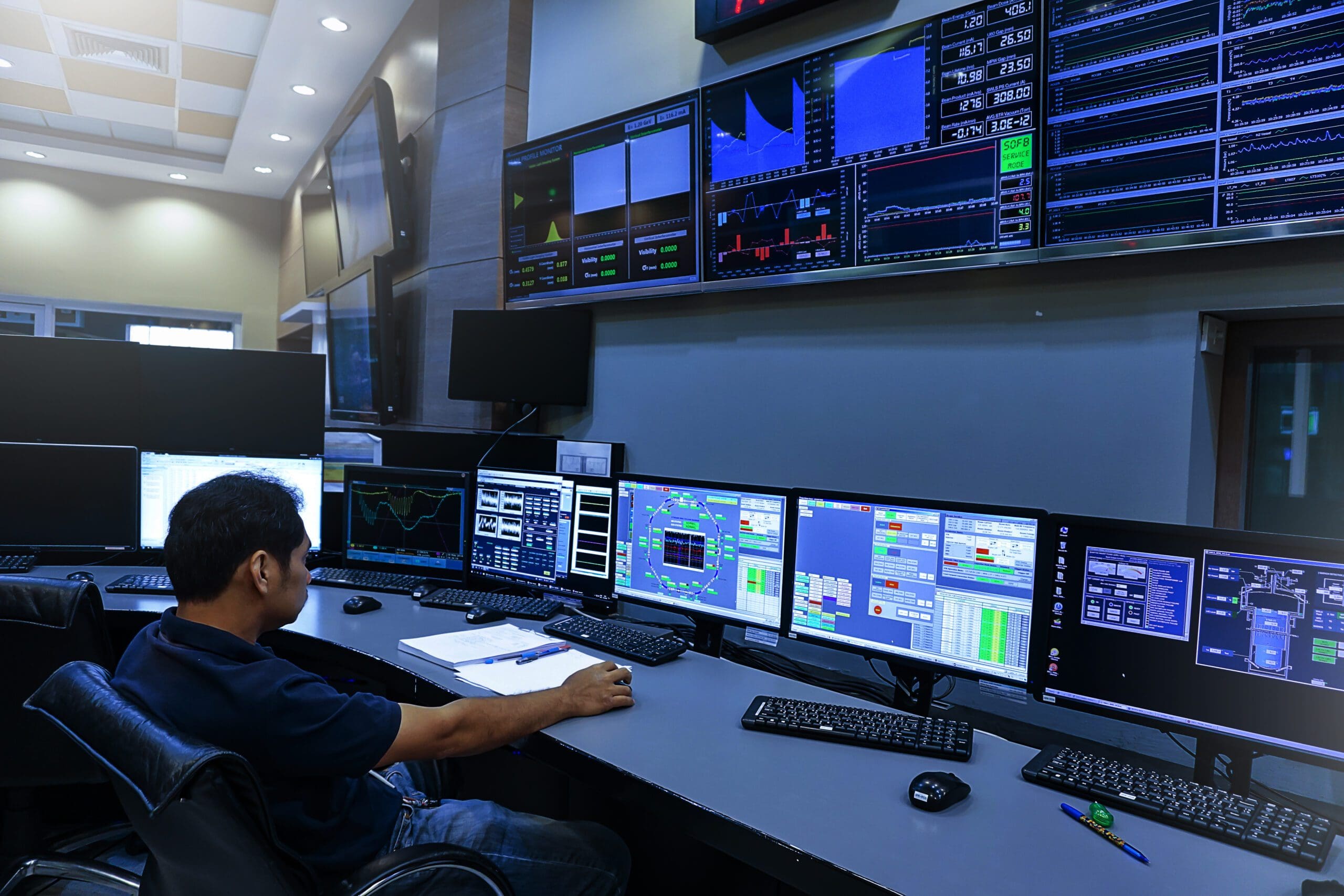
In logistics environments, control systems act as the nervous system of the facility. PLCs, edge controllers, and supervisory software coordinate movement, sequencing, and system state across thousands of devices. A capable warehouse automation integrator focuses on:
- Deterministic control and predictable behavior
- Clear ownership of commands and feedback
- Robust interlocking and fault handling
- Graceful degradation when subsystems go offline
Without this foundation, adding more equipment often just increases complexity rather than improving throughput.
Software and Controls as a Unified System
Modern logistics systems rarely operate independently of business systems. Control layers must exchange information with WMS, WCS, ERP, and analytics platforms, often in real time. This can introduce challenges involving synchronizing physical movement with inventory data, managing latency and data integrity, and handling exceptions when digital and physical states diverge.
Any good logistics systems integrator understands that controls and software must be designed together. Treating them as separate efforts almost always leads to brittle systems that are difficult to troubleshoot and maintain. This integration also supports IT/OT convergence, ensuring operational data flows reliably between control systems and business platforms.
Designing for Variability, Not Ideal Conditions
Warehouse operations are defined by variability. Order profiles change. Labor availability fluctuates. Equipment performance degrades over time. Peak demand rarely aligns with ideal operating conditions. Effective control system integration accounts for the reality of logistics environments. Instead of assuming ideal operating conditions every time, control strategies are built to absorb surges and slowdowns, dynamically reroute flow, prioritize recovery over on-page optimization, and provide operators with actionable diagnostics.
Brownfield Logistics Environments Add Complexity
Many logistics facilities aren’t greenfield builds. They’re evolving operations with legacy PLCs, aging conveyor lines, and software platforms that were never designed to scale. In these environments, you need a logistics integration specialist who can:
- Work within existing control architectures
- Introduce standardization without disrupting operations
- Modernize interfaces while preserving proven logic
- Plan upgrades around live production schedules
With expert integration, even incremental equipment changes can deliver immediate gains in uptime, flow consistency, and visibility.
Integration Sustains Performance
Equipment matters, but it isn’t enough to create a resilient logistics operation on its own. Throughput, reliability, and adaptability are driven by how systems are integrated, how control decisions are made, and how well the operation can respond to unexpected events. That work happens at the control system level. For organizations evaluating a logistics integrator, the most important question isn’t which equipment they prefer, but how they design, implement, and support the control systems that hold everything together. Partnering with an experienced integrator ensures that control system design supports long-term scalability, uptime, and operational flexibility.